
1894-1975
From 1933 to 1956, her likeness was seen on tens of millions of calendars, magazine centrefolds, advertisements, posters, and billboards as well as on all sorts of speciality products. In 1950, "The Petty Girl" even became a major motion picture. The picture shows George Petty presenting his artwork to the Navy, 1942 © Chicago Sun-Times.
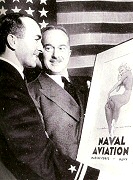
From 1933 to 1956, her likeness was seen on tens of millions of calendars, magazine centrefolds, advertisements, posters, and billboards as well as on all sorts of speciality products. In 1950, "The Petty Girl" even became a major motion picture.
Petty's creation made her debut in the autumn of 1933, in a full-page cartoon accompanied by a snappy caption in Esquire magazine's inaugural issue. For the rest of the decade, she was featured in such popular venues as monthly advertisements for Jantzen Knitting Mills and Old Gold cigarettes, a print, postcard, and full-page national advertisement for Trans World Airlines (1936), Esquire's deluxe hardcover Petty Folio (1937), and Life magazine's article, "Petty Girl ... Is Feminine Ideal American Men" (June 26, 1939). By 1940, Petty had become a national celebrity. His relationship with Esquire had worn thin, however, and when they secured the services of Alberto Vargas a year later, he left the magazine - but not before he had contributed a rich legacy to the history of pin-up and pin-up art.
When you touch the wrist of a Petty Girl, you almost expect to feel a pulse
During the next ten years, the Petty Girl seemed to be everywhere. Along with the Varga Girl, she helped build morale during wartime. A 1940 advertisement for Jantzen, featuring a Petty Girl m swimsuit the artist had designed himself, ran for months in every major magazine. This image, Petty's most popular to date, led to a great number of commissions for the artist, including pin-up ads for Pepsi Cola and, on November 10, 1941, a Time magazine front cover of Rita Hayworth.
In 1945, Petty entered into a special relationship with Fawcett Publications' True magazine, where the Petty Girl began appearing every month as either a centrefold or full-page illustration. The magazine published best-selling Petty Girl calendars in 1947 and 1948 that contained some of the artist's finest work. Among his commissions for the entertainment industry were four promotional pinups for MGM's musical Ziegfeld Follies (1946).
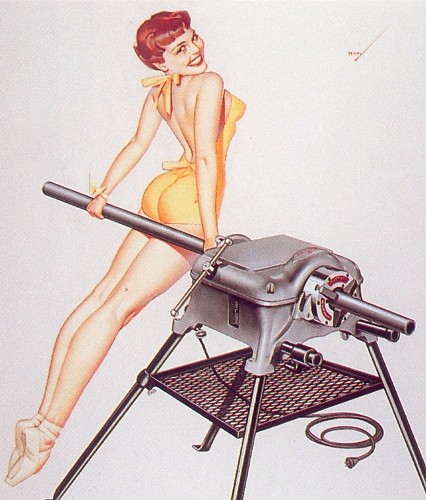
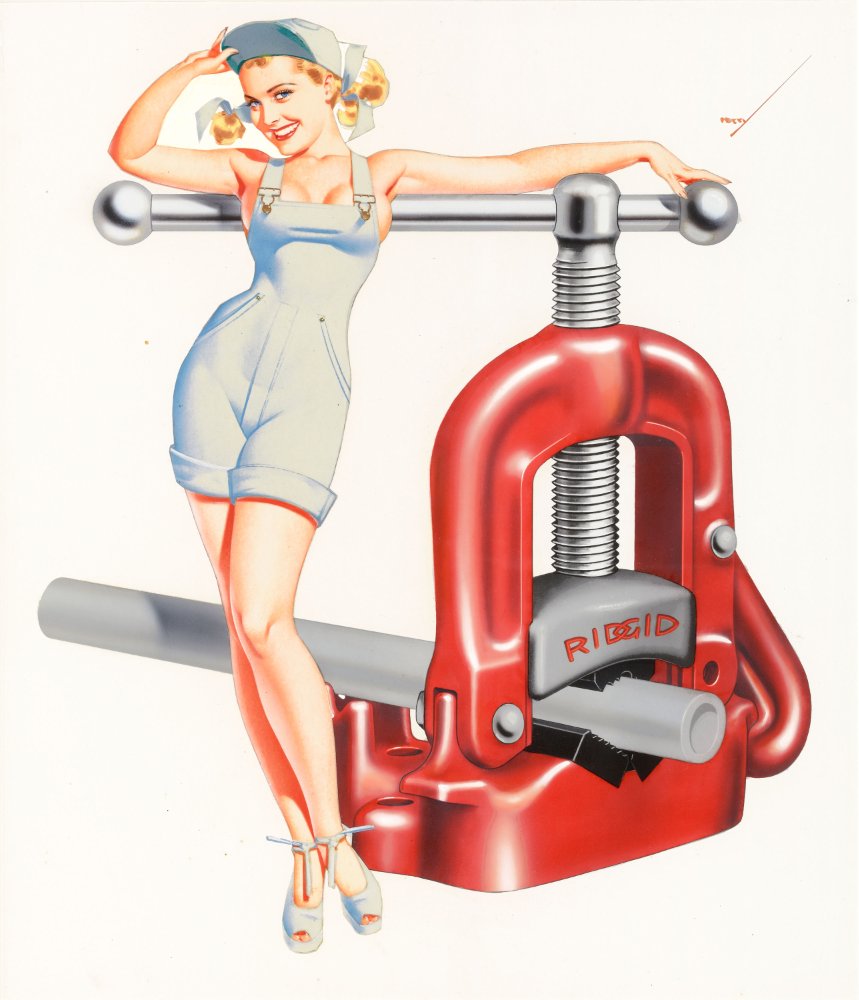
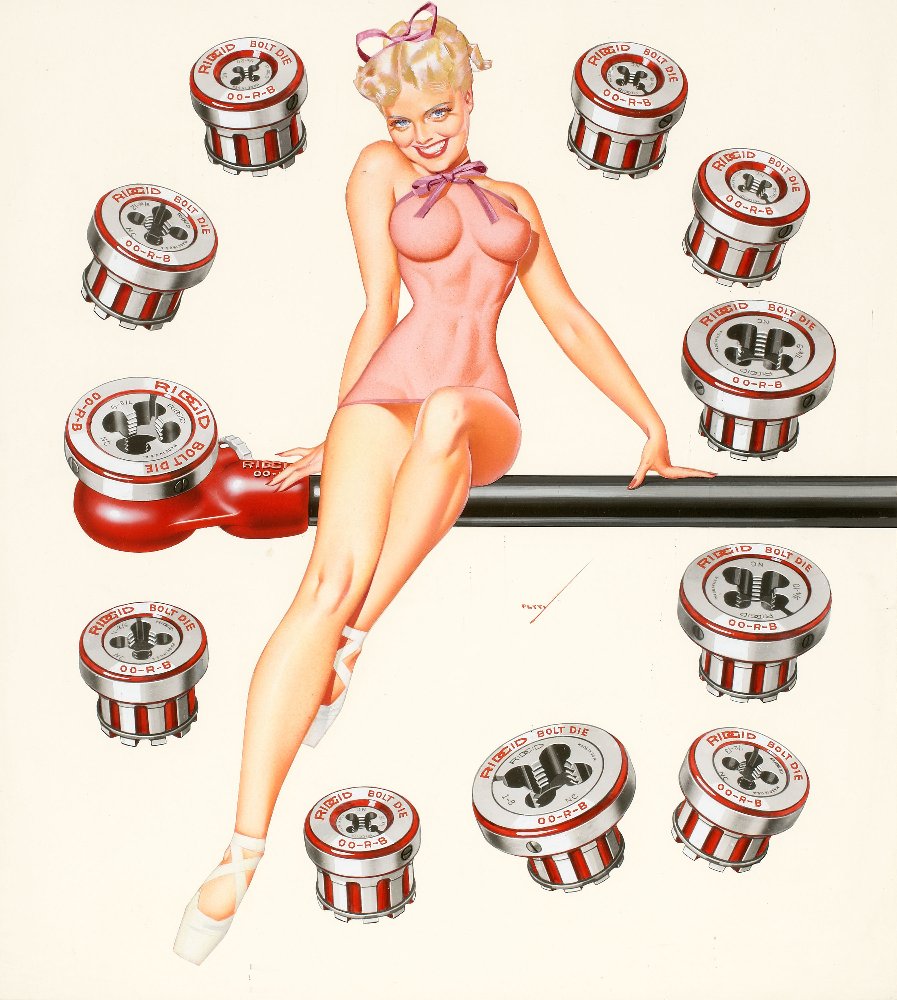
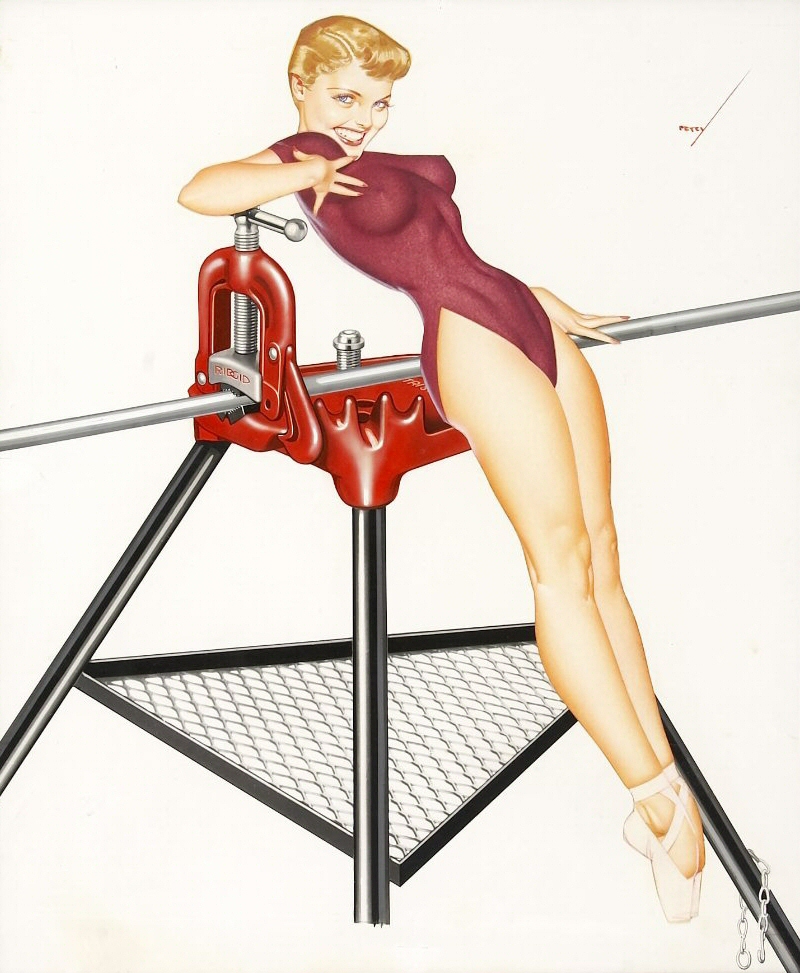
Petty returned to Esquire to create two calendars in 1955 and 1956, which garnered a whole new generation of admirers for him. His other important calendar client, besides Esquire and True, was the Ridg Tool Company. His innovative works for that firm were devised in a highly original way. Petty first painted an image on illustration board, then cut it out and pasted it onto a photostat of a tool, and finally painted over the background image.
George Petty biography borrowed from The Great American Pin-Up by Charles G Martignette & Louis K Meisel.
All Pin-up Files gallery images are subject to copyright and must not be considered to be in the public domain. All copyright information is shown where known.
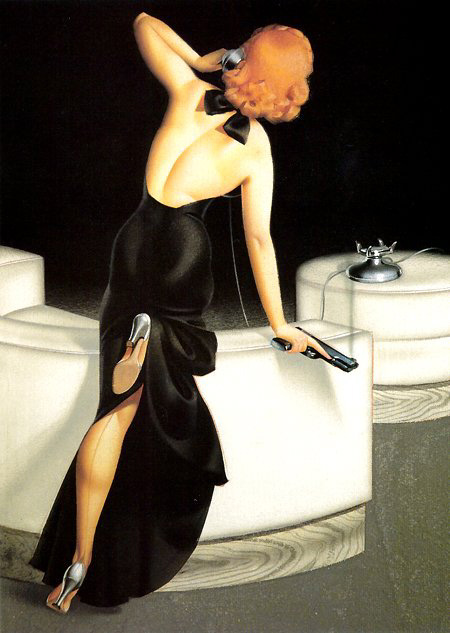
Date: 1935
Notes: Esquire
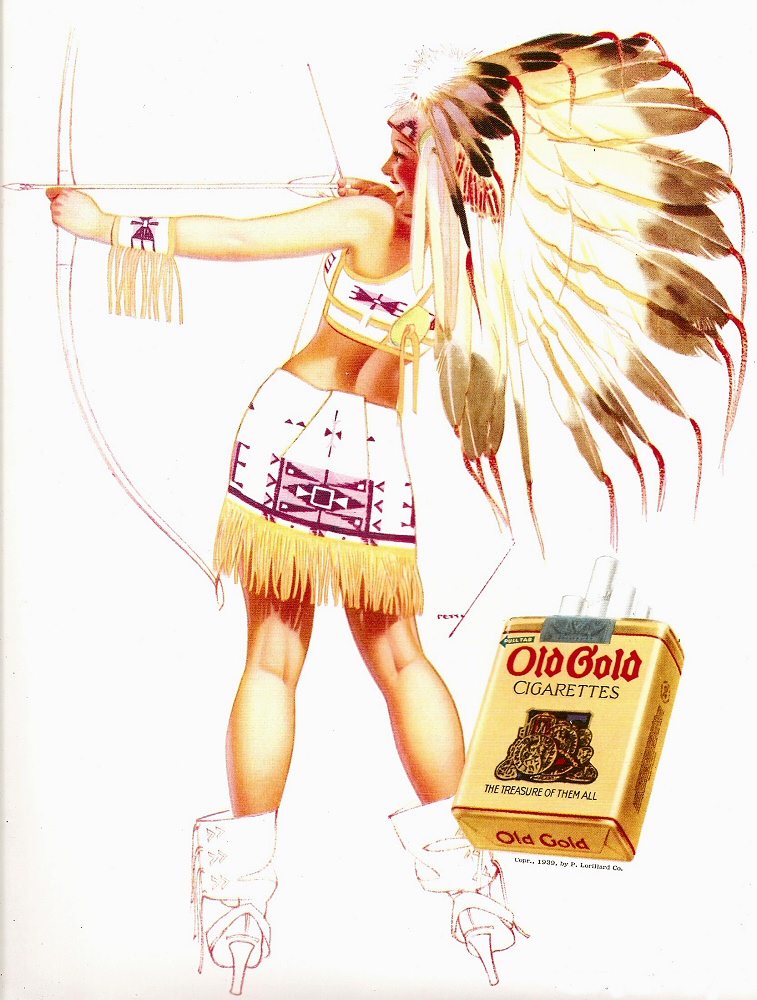
Date: 1939
Notes: "Old Gold Cigarettes" © Lorillard Co. Inc
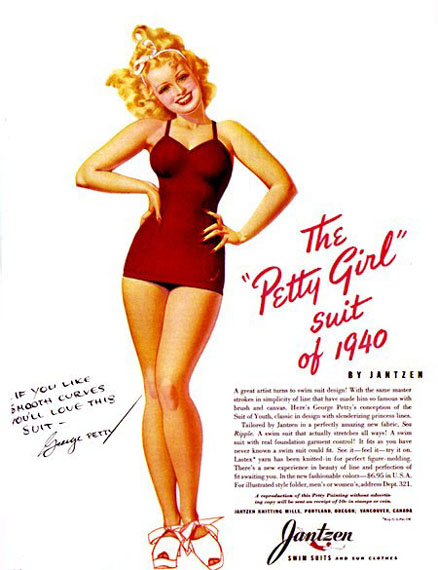
Title: The Petty Girl Suit
Date: 1940
Notes: Jantzen
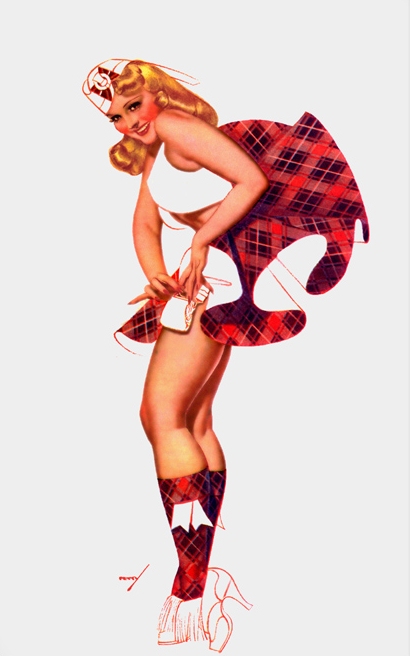
Title: Betty MacPetty
Date: 1940
Notes: Old Gold Cigarettes
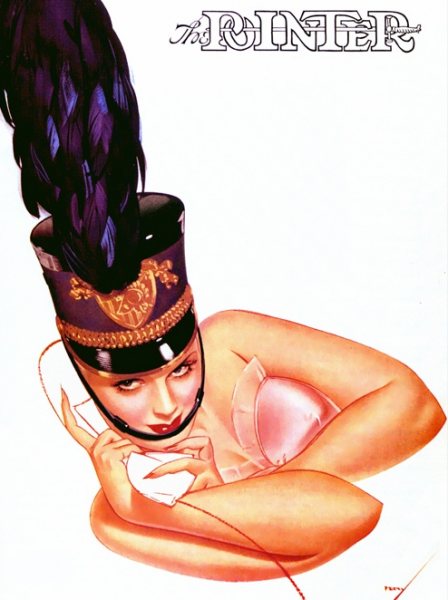
Date: 1941
Notes: Cover: The Pointer, February 1941
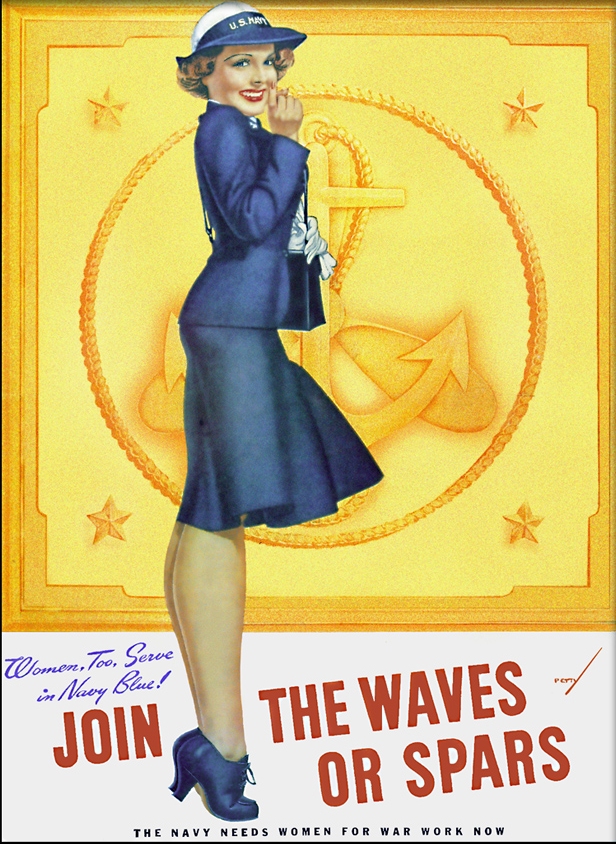
Date: 1942
Notes: WAVES or SPARS poster, as reproduced in the Chicago Daily Tribune, April 6 1942
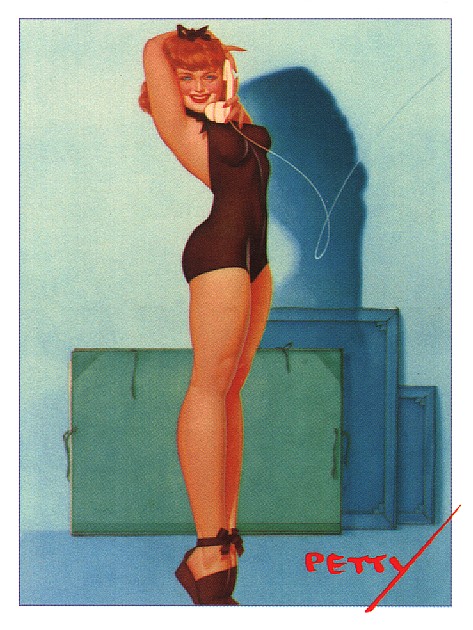
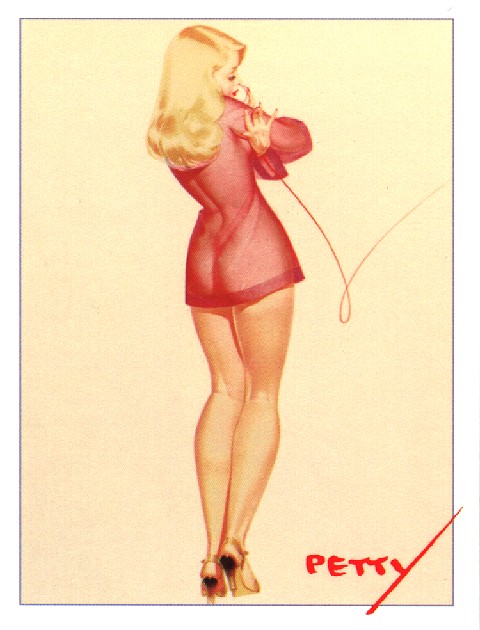
Date: c1946
Notes: True
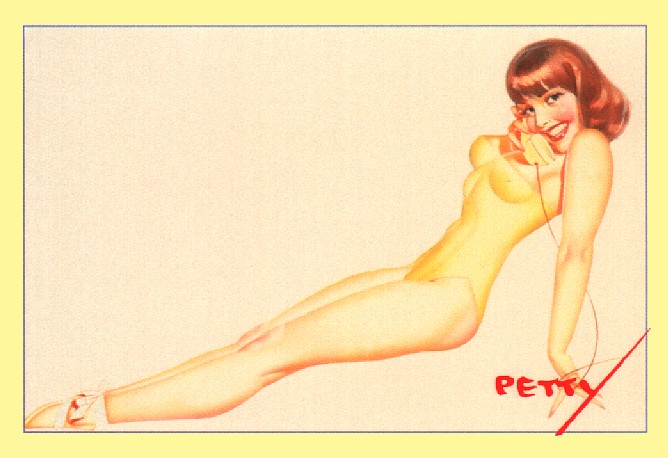
Date: c1946
Notes: True
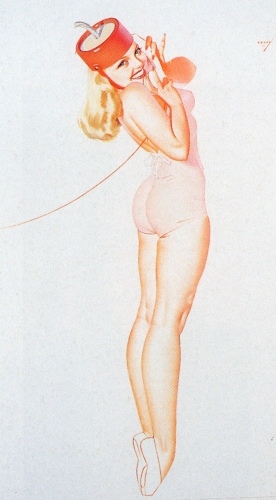
Date: c1945
Notes: True
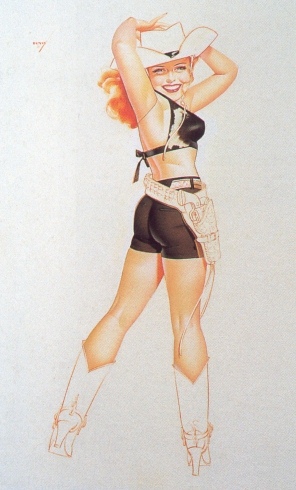
Date: c1946
Notes: True
Date: c1946
Notes: True
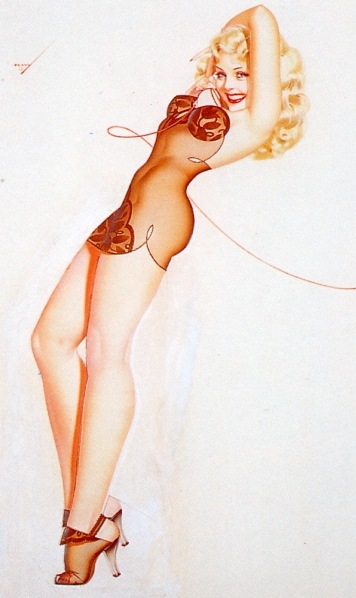
Date: c1945
Notes: True
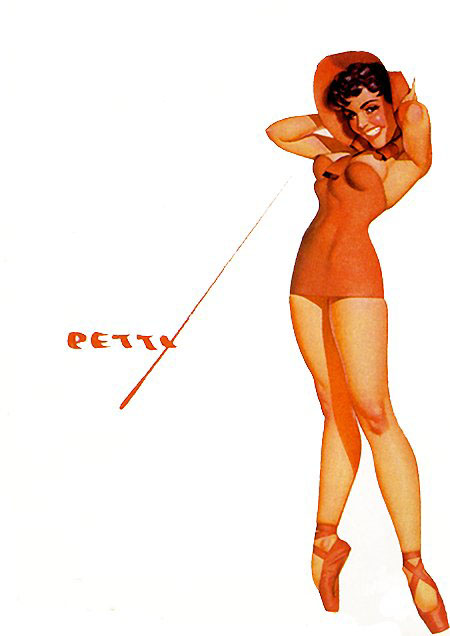
Date: 1945
Notes: Esquire
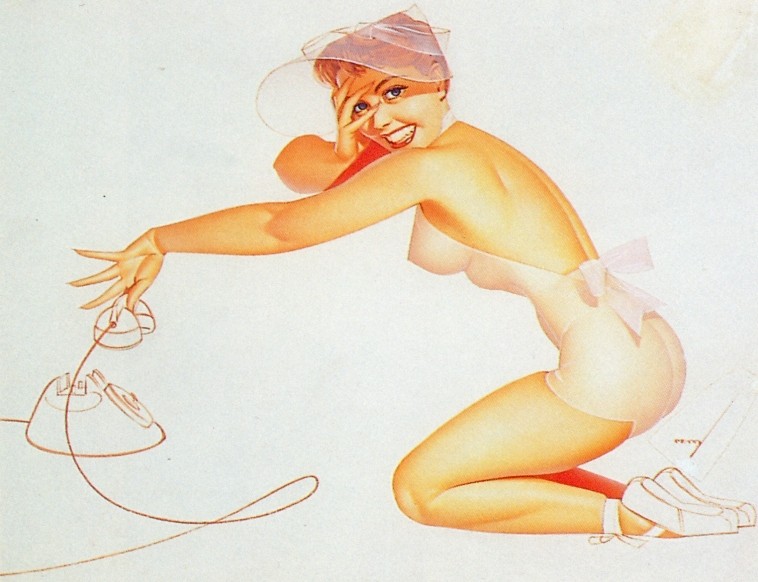
Date: 1945
Notes: Esquire
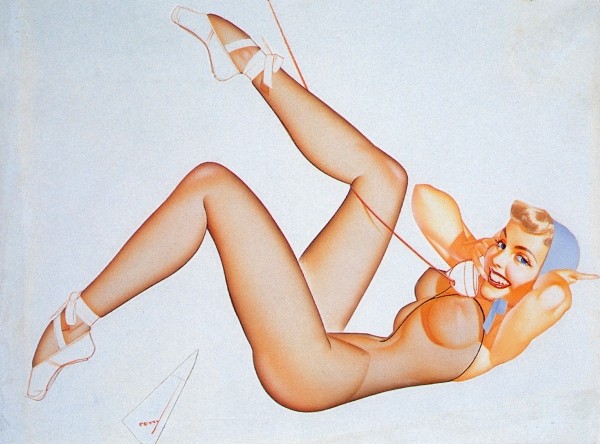
Date: 1945
Notes: Esquire
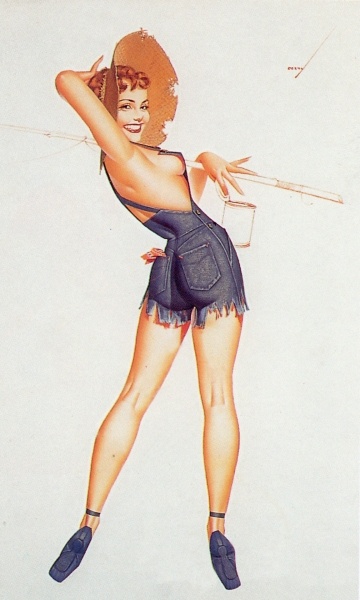
Date: 1955
Notes: Esquire
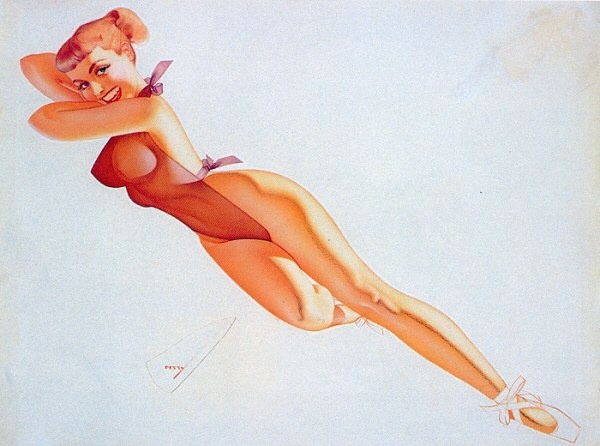
Date: 1945
Notes: Esquire
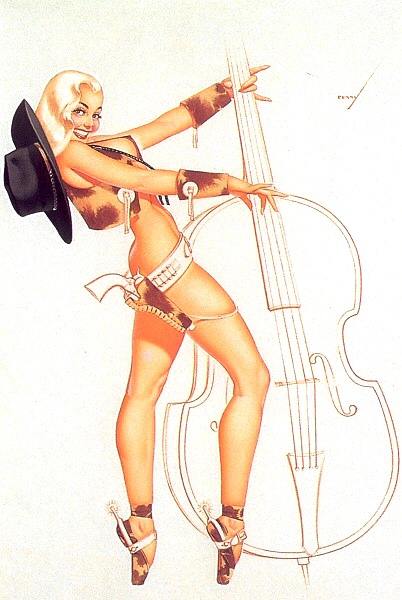
Date: 1945
Notes: Esquire
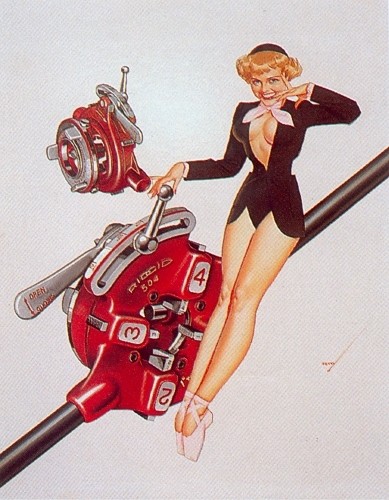
Date: 1956
Notes: Ridgid Tool Company calendar
Date: 1956
Notes: Ridgid Tool Company calendar
Date: 1956
Notes: Ridgid Tool Company calendar
Date: 1956
Notes: Ridgid Tool Company calendar
Date: 1956
Notes: Ridgid Tool Company calendar
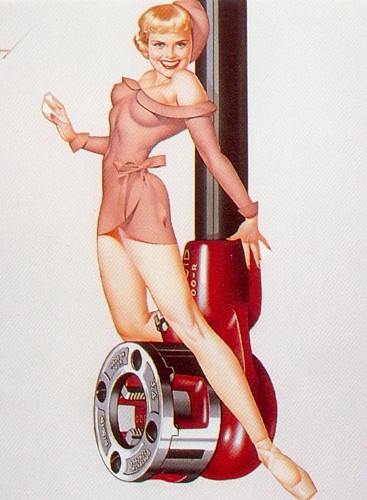
Date: 1956
Notes: Ridgid Tool Company calendar
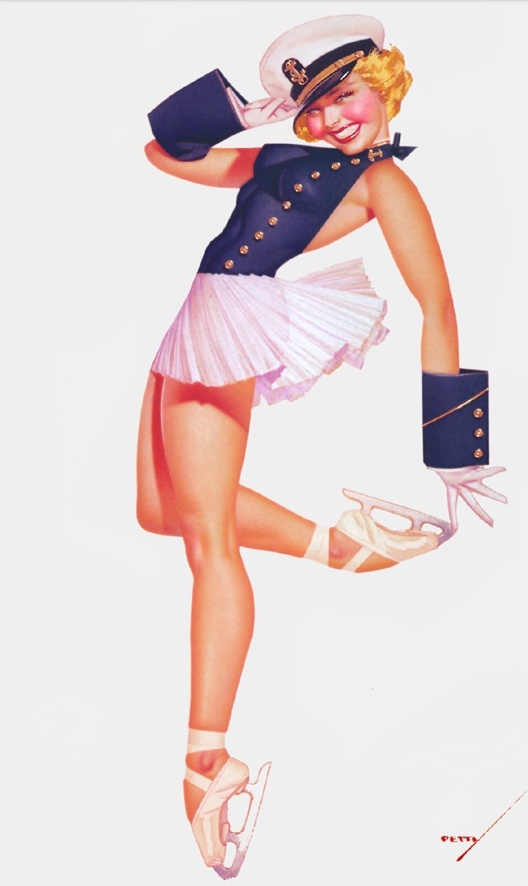
Title: Naval Cadet
Date: 1964
Notes: Original painting for the 1964 Ice Capades
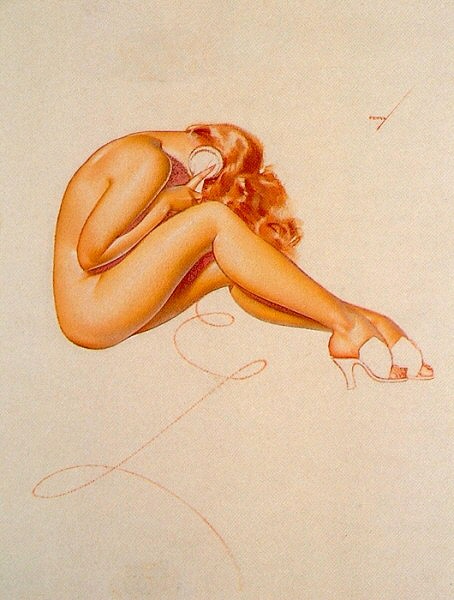
Notes: Esquire
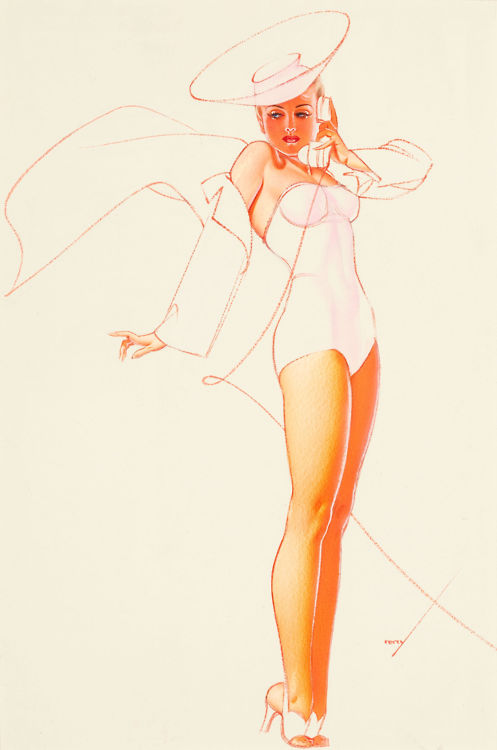
Notes: Esquire

Notes: Esquire

 Buy retro lingerie & nylons